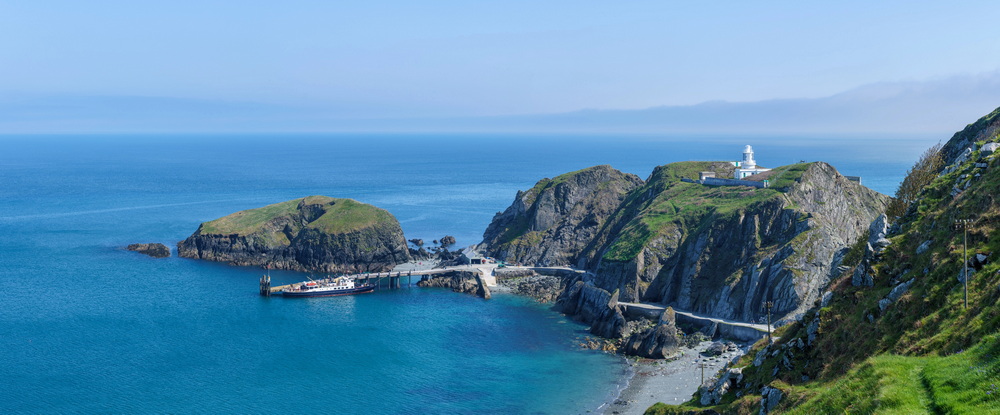

Lundy is the largest island in the Bristol Channel. A granite outcrop, 3 miles long and ½ a mile wide, 12 miles (19 km) off the North Devon coast. The name ‘Lundy’ is the name of a shipping forecast area in the UK and is Old Norse for ‘Puffin Island’.
Originally purchased in 1834 by William Hudson Heaven and subsequently inherited by his son until 1917 when Lundy was bought by Augustus Langham Christie. Christie then sold Lundy in 1925 to Martin Coles Harman who was deemed a bit of a character and pronounced himself the ‘King of Lundy’. He even issued stamps and coins with his own head on alongside several flags he designed.
One flag was flown when the Queen Mother visited from the Royal Yacht Britannia in 1958 and on visits from Trinity House, owners of the two lighthouses on Lundy, both of which are still in service today.
After Harman's death the island was sold to the National Trust thanks to a generous donation from Mr Jack Hayward, English businessman, property developer, philanthropist, and president of football club Wolverhampton Wanderers.
Today, The Landmark Trust manages the island on behalf of the National Trust.